The Little Prince, an interactive tale
A web storybook the agent fleet built chapter by chapter, with watercolour art, music, narration in three languages and something to tap in every scene.
Screenshot 1 of 5
Teaser
Stack
Pipeline
- 1
A task is filed for the fleet
The founder describes the tale in one issue (scenes in book order, one interaction per scene, music, effects, two languages); an executor claims it in a task container and builds a static TypeScript app with no framework.
agent-corpTypeScriptVite - 2
Every chapter is data, not code
Each scene declares its location, artwork, interaction and easter eggs; every word the reader sees lives in one content pack per language, and progress is saved per scene so a reordered book still resumes in the right place.
TypeScript - 3
Interactions, eggs and ambient motion are wired per scene
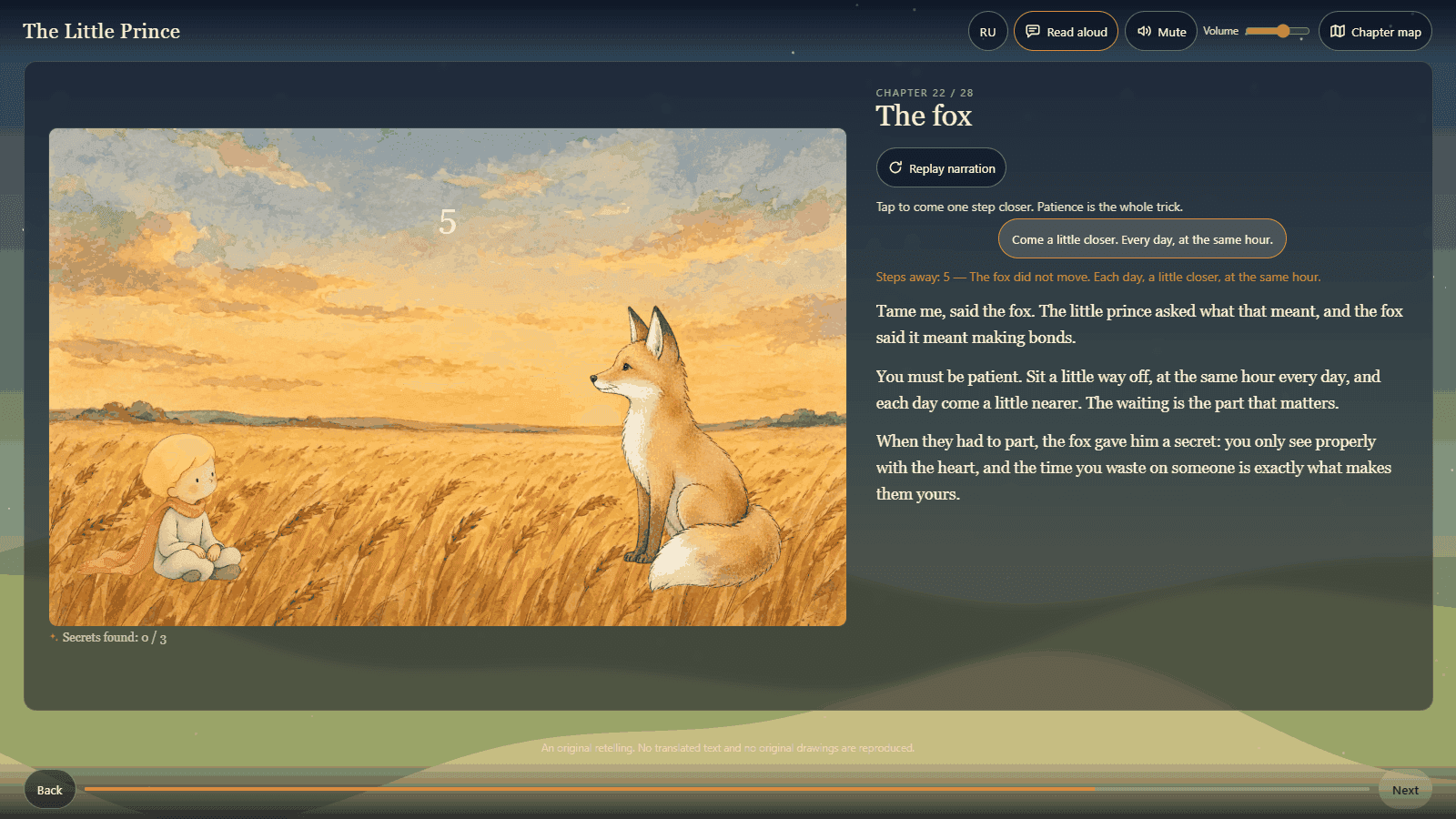
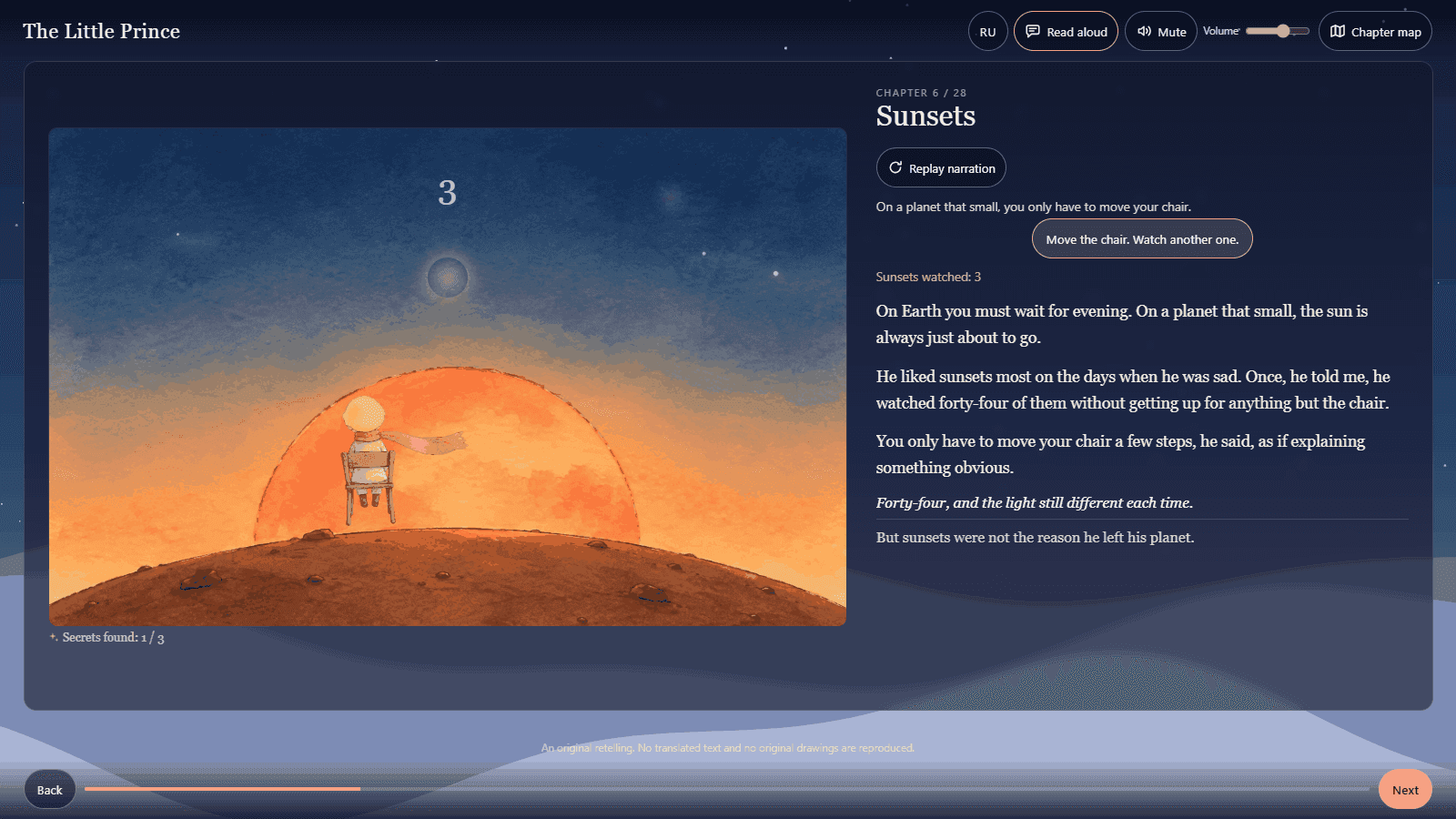
A small reducer drives each chapter's main interaction (move the chair for another sunset, step closer to the fox, lower the bucket into the well); hidden objects answer a tap or a key with an animation and a sound, and a reduced-motion path replaces every effect with a fade.
TypeScriptSVG - 4
The art is painted through the fleet's image endpoint
An art task generates each chapter's watercolour still and the cut-out layers the interactions move, through the fleet's OpenAI Images endpoint, curates them against a written style document, and an adversarial visual pass checks palette, anchors and halos before merge.
OpenAI APIagent-corp - 5
Music, ambience, effects and narration come from ElevenLabs
Four looping music themes, ambience beds matched to the scenes, one-shot effects and a narration clip for every chapter in English, Russian and Ukrainian are generated with ElevenLabs; the Web Audio engine runs them on separate buses and lowers the music while the narrator reads.
ElevenLabsWeb Audio API - 6
Tests run on every pull request, reviewers on other models send findings back
Lint, type checks, unit tests over content parity, saves and the audio routing, and a Playwright smoke test of the built site run in GitHub Actions; a reviewer on a different model reads the change, a revise round answers it, and the founder merges.
VitestPlaywrightGitHub Actionsagent-corp - 7
The build is published as a static site
The Vite build is produced in a container on the media host and copied next to the other stories, where Caddy serves it; the previous build is kept beside it for a rollback.
ViteCaddy
Links
See it live
Where it runs
What it does
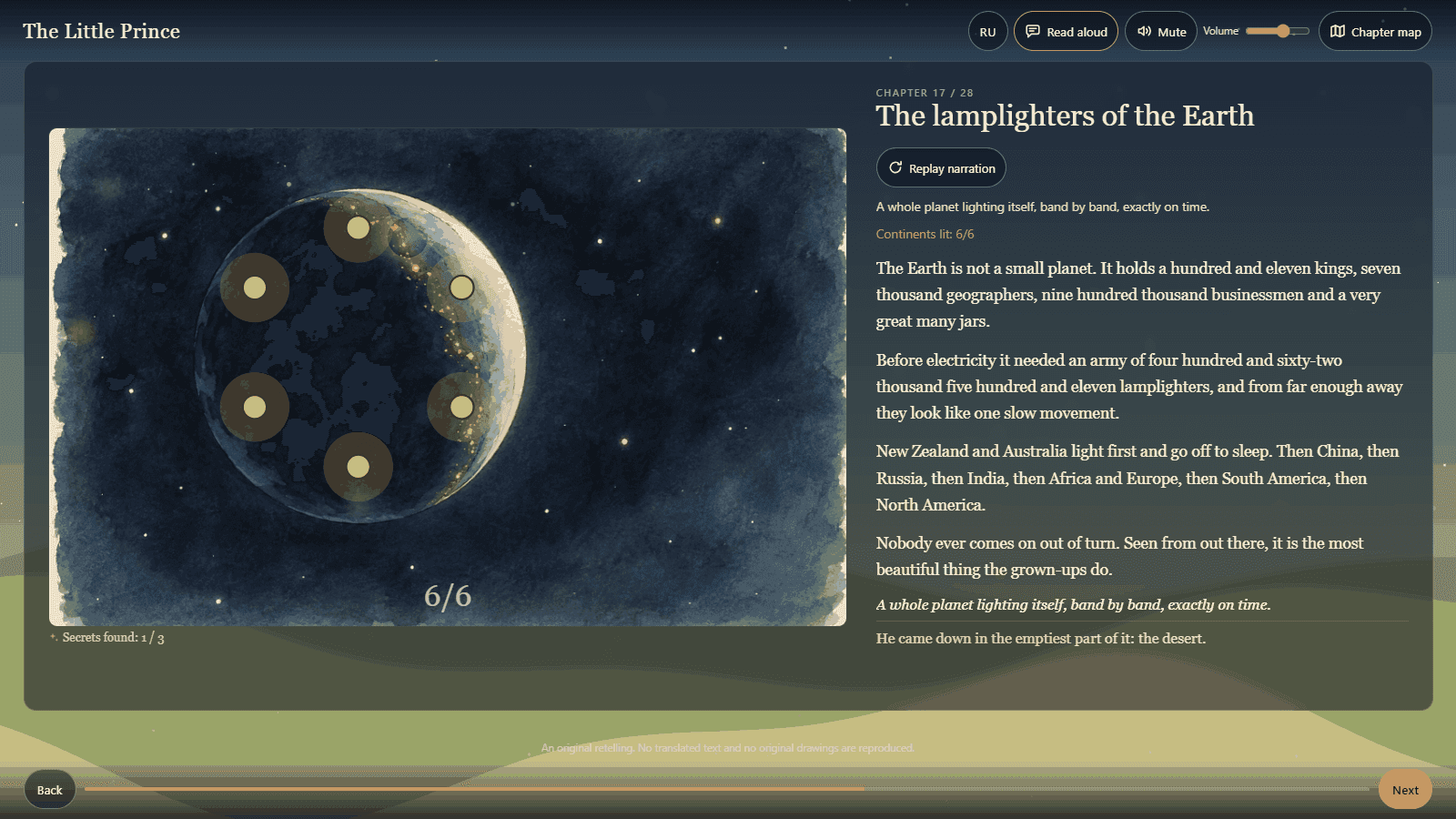
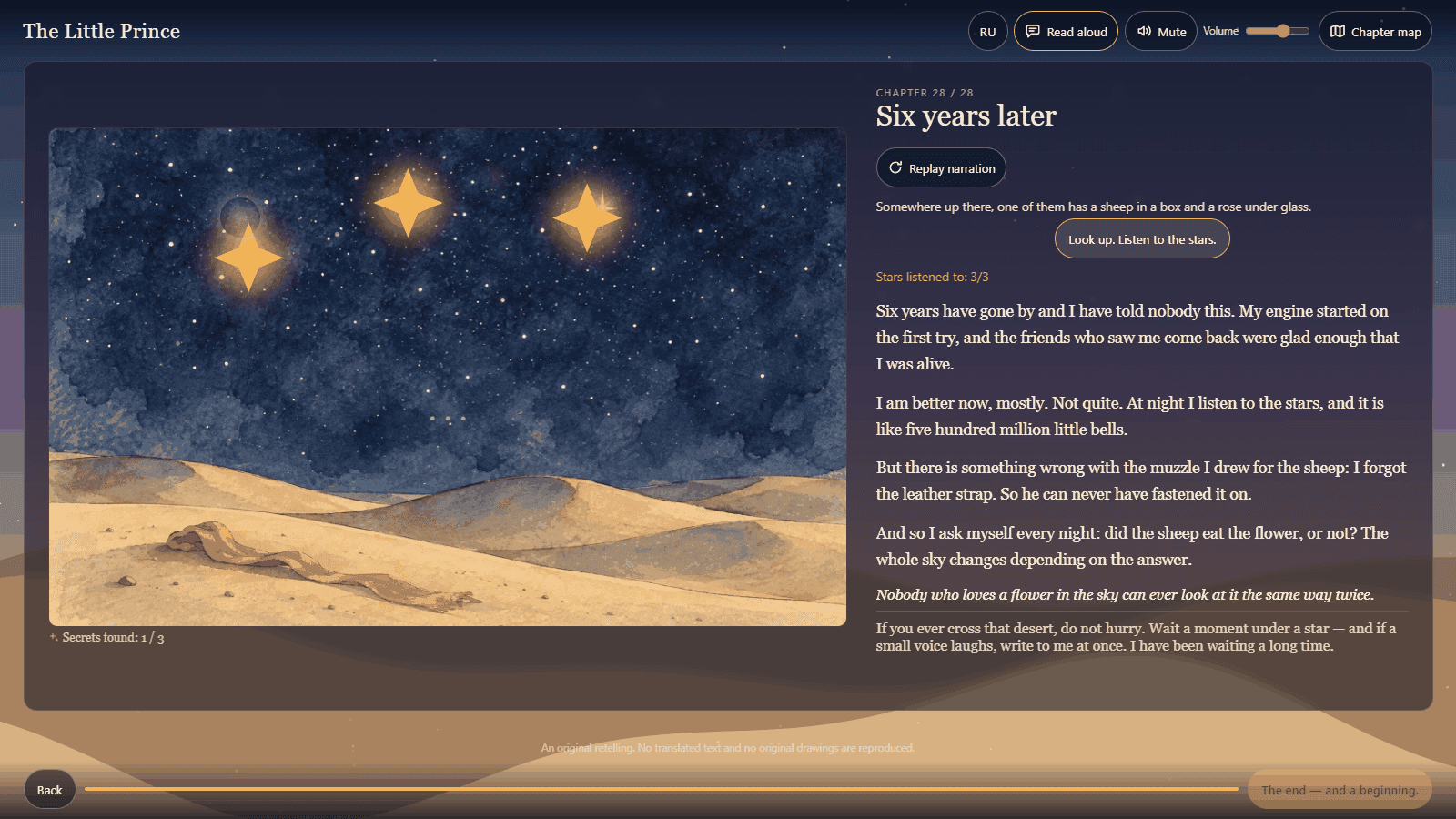
An interactive retelling of The Little Prince you read in the browser. As counted in the code on 2026-10-16, it has 28 chapters in the order of the book, each with a watercolour illustration, a short text and one thing to do: clear the baobab sprouts, move the chair for one more sunset, light the Earth's lamps continent by continent, come one step closer to the fox every day, listen to the stars laugh at the end. Each chapter also hides a few objects that wiggle, glow or chime when tapped; the same count on 2026-10-16 found 85 of them across the book.
Music changes with the place - the desert, the little planet, the journey, the Earth - under an ambience bed, and a narrator reads every chapter aloud in English, Russian or Ukrainian, switched with one button. The text is our own retelling; no translation text and no original drawings are reproduced. It works on a phone, a tablet and a wide screen.
How it works
The fleet built it the way it builds any product: the founder filed issues, executors in task containers wrote the code, reviewers on other models sent findings back, and the founder merged. The first issue produced the app itself - scenes, interactions, the audio engine and both content packs, with placeholder SVG art. Art tasks then painted the watercolours through the fleet's image endpoint and passed an adversarial visual check; a later feature added every missing chapter in book order, and a second art task painted those.
The app has no framework. Each scene is a data entry: its location chooses the music theme, its interaction is a small reducer, its easter eggs are positioned on the painting in percentages, and every visible string sits in a content pack per language that the tests keep in step. Progress is stored per scene, so a reordered book still resumes where the reader was.
Audio is files, not synthesis: ElevenLabs generated the music, the ambience beds, the effects and the narration, and the Web Audio engine loads only the current chapter's set and warms the next. Narration ducks the music while it plays, and after a solved chapter the narrator also reads its closing lines.
Where to see it
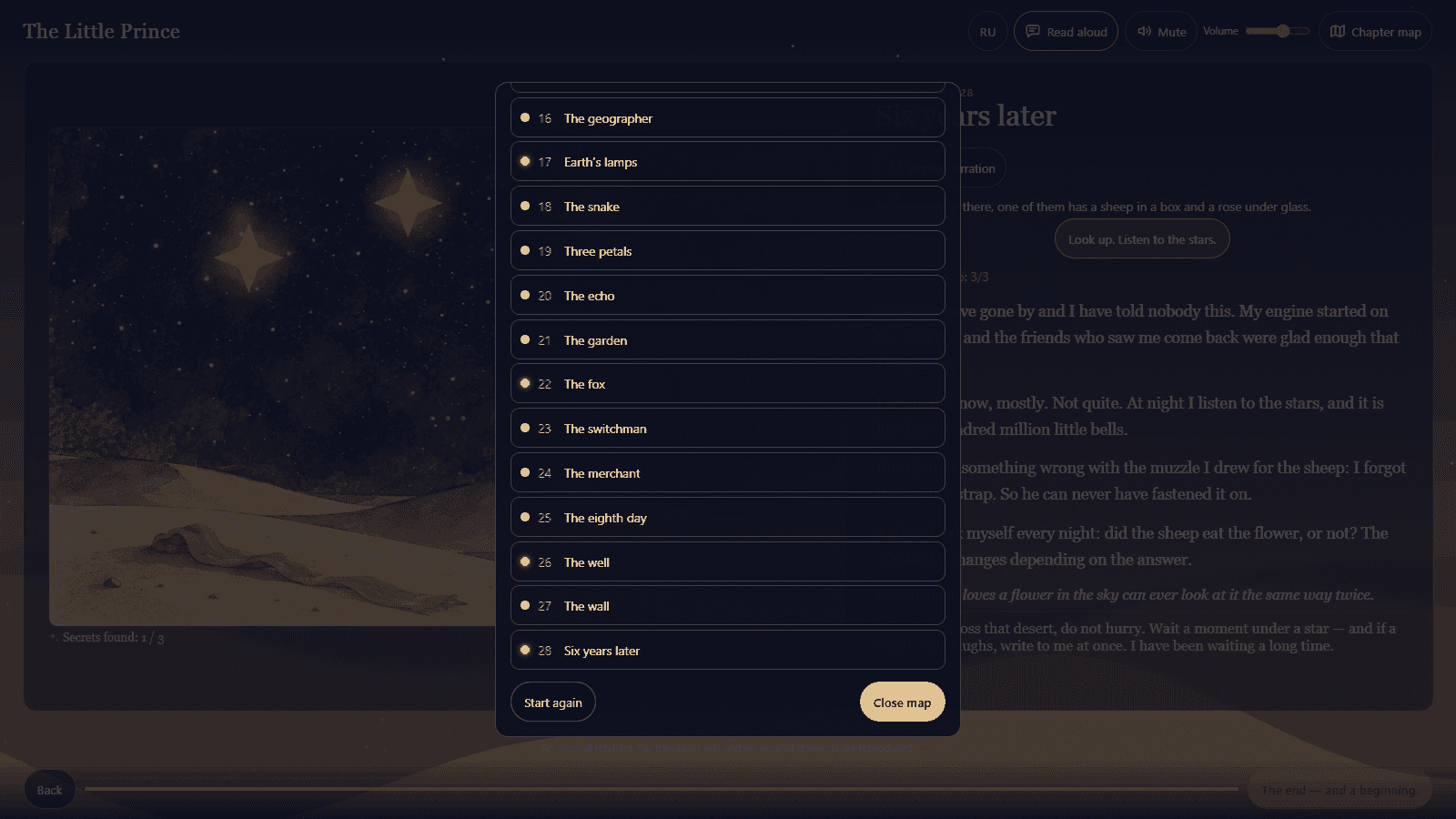
The tale is live in the browser - start at the first chapter, or open the chapter map to jump to any you have visited. The language button in the header cycles through English, Russian and Ukrainian, and Read aloud turns the narrator on or off. A teaser recorded on the live site is on the agency YouTube channel, in the Showcase playlist.
Share this case